I “met” Charlie Nichols in one of the Facebook forums I frequent and was charmed by the way she introduced her daughter’s friend to new foods. ~Leilehua Yuen
Not mad but sort of a palate cleanse (pun intended) for all the stories we hear about culinarily conservative people turning their noses up at new foods. (Though maybe some of you might get mad about it because I added an ingredient normally not present—at least not in any I’ve ever had LOL.)
My daughter is having a sleepover tonight. Her friend is from Poland (we’re from the US). Her friend is a self-described picky eater and not very adventurous when it comes to new foods. (I personally relate, as I have emetophobia and panic disorder and trying new foods/other people’s cooking has always made me extremely anxious ever since I was a child. I even avoided sleepovers entirely because I didn’t want my friends’ families to think I was rude or didn’t like their food.)
I made miso soup and gohan this evening. She doesn’t like mushrooms (I asked first) so I left those out and made a separate pot for myself and my partner. But I did add wakame and tofu, two things she’s never had before.
I only gave her a small bowl and told her it was perfectly okay if she didn’t like it and didn’t want to finish it. (When I was a kid with my food fears, having an understanding host would have helped me feel much less anxious and I probably would have enjoyed way more dishes.)
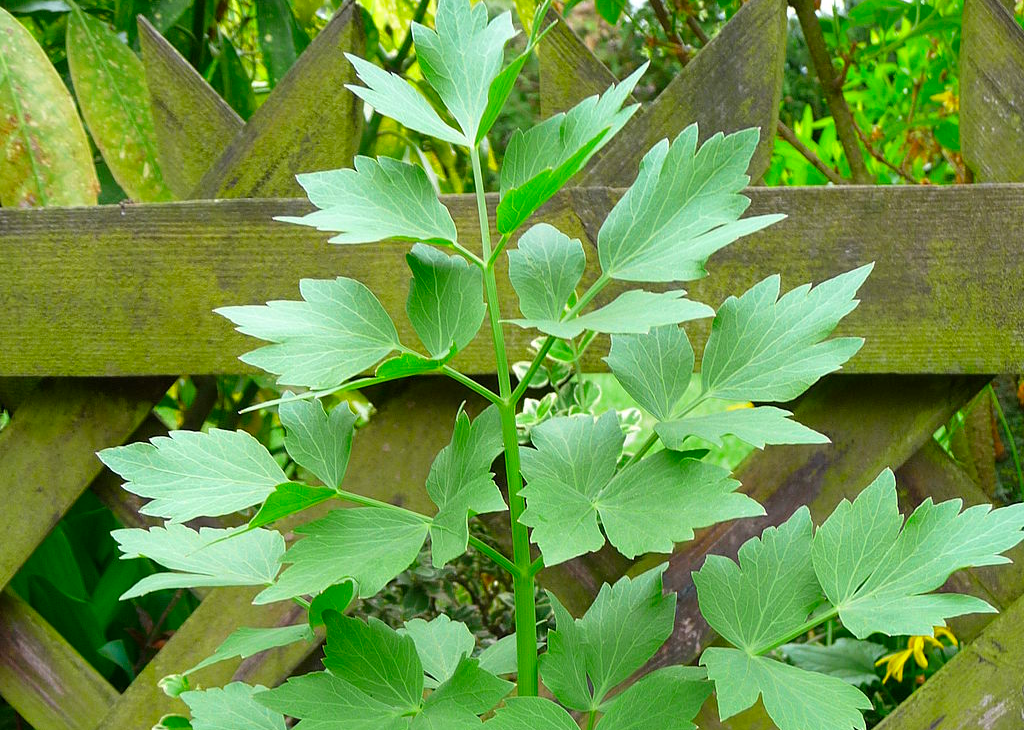
Her mom has a big garden and grows lovage, a staple in their home-cooked foods. Before I met my daughter’s friend, I had actually never eaten lovage myself. But her mom is always so polite and she sent the girls with a big stalk of lovage.
I chopped up some leaves and put them in the pot I made for the girls, thinking perhaps having a familiar taste in the miso soup would be comforting and easier for her to try. I was surprised how it subtly changed the taste and it became sort of very fresh.
She and my daughter ate their bowls on the porch and I checked on them after and asked, “What’s the verdict?”
Her eyes were big and she had a big smile and said, “I like it!”
Success!
Obviously miso soup is one of the milder things to try, but still, when you have someone who is averse to stepping outside their culinary comfort zone but be willing to and they end up liking it, it always feels like a win. And being able to add the lovage felt sort of like a really respectful gesture, like she helped make the soup too.
Years ago, when I was a young mom, I used to save all the “good” stuff for a “special occasion.” Sadly, things were rarely special enough. Maybe Christmas, a birthday or two. And then when I went to get out the special thing, whether it be a special cake mix mailed by a friend, or a special dress, it would be damaged and no longer useable.
The worst was when I moved from Hilo to Mountain View. I carefully packed hundreds of rare dolls my family had collected for generations. Same for crystal glassware, silver plate flatware, and embroidered linens. I trucked them up to the new house, and carefully put them in the basement to store for when the new house should be finished. I had decided that the housewarming would be “special” enough to get everything back out.
Years went by. We met with delay after delay. I got pregnant and added a little girl to our family of three. Finally one Christmas I decided that the house was finished enough that we could decorate and have a “special” Christmas. I lugged the boxes to the new house.
Every single one had been chewed through by rats. Almost all of the dolls were destroyed. The crystal glassware suffered much breakage as the rats has chewed up the packing, causing it to shift and the glassware to fall within the boxes, the long stems of the wine glasses shattering the fragile bowls of their neighbors. The silver was lifted off the plated flatware, destroyed by rat urine. The linens were chewed into rat nests.
I cried as I threw away what had been thousands of dollars worth of collectable things, and four generations of family history. My mother never let me forget it.
I salvaged what I could of the porcelain dolls, made them new bodies and clothing, and gave them to my toddler to play with.
Many people who saw her playing with the dolls remarked on how I should save them “for special occasions.” If the experience taught me anything, it is that every moment we are with those we love, it is a special occasion. I would rather every porcelain doll was damaged by being “loved to death,” than that they be nesting material for the rats.
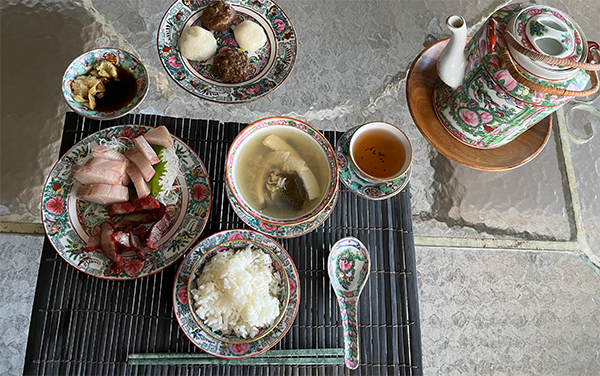
And so, for Chinese New Year, I give myself a breakfast of leftovers on my Nana’s antique Rose Canton dishes. Many of the original set have broken over the years, so I haunt antique shops and e-bay to find replacement pieces. Thus, the set has pieces that range from the mid-19th century to the mid-20th century. Not long from now, the oldest pieces will have seen 200 years of use!
Of course I am careful how I use them. Food should never come into contact with the bright white lead-enhanced glazes. And there probably are other glazes that are deadly, as well. In those pieces, I set a doily and individually wrapped foods.
Last night, my husband asked if I was sure I wanted to use the pieces, as they might be broken. Yes. I do want to use them. If I cannot enjoy and share their beauty, I would rather pass them on to someone who can.
So, as I wash and put them away for future special occasions – those times that we share with those we cherish – I will be thinking of the next post – some yummy Chinese foods. After all, this is a cooking blog!
Gung hee fat choy! May the Year of the Rabbit bring you blessings and joy!
In my ʻohana, we have always enjoyed making, giving, and receiving homemade gifts. My mother was one to start about August with the holiday baking, if she did not already make the coming year’s fruitcakes during the previous season. Definitely she would start the springerle in August. I’m a bit less organized, so I generally remember sometime around Thanksgiving.
One of my childhood Christmas memories is the fragrance of gingerbread filling my Mama’s kitchen as she began her holiday baking. Here is my mother’s gingerbread man recipe.
Who remembers this book?
Geraldine’s Family Gingerbread Men
1 cup, (2 sticks or 1/2 pound) of butter or margarine
1 cup sugar
1 cup dark molasses
1 egg
2 tablespoons cider vinegar
5 cups all-purpose flour
1 ½ teaspoons baking soda
1 tablespoon ground ginger
1 tablespoon ground cinnamon
1/2 teaspoon ground nutmeg
1/2 teaspoon ground anise
1/2 teaspoon ground cardamom
1/4 teaspoon ground clove
In a large bowl, cream the butter and sugar until fluffy. Add the molasses, egg and vinegar and blend well. Sift all dry ingredients together and add gradually to the molasses mixture, blending after each addition. The dough will most likely be quite soft. Divide the dough in half, form into balls, pat into disks about 1 inch thick and wrap in plastic wrap. Refrigerate for at least three hours or overnight.
When ready to bake, preheat the oven to 375°f (190°c or Gas mark 5). Remove from the refrigerator one disk at a time and working on a lightly floured surface, roll the to be about one-quarter inch thick. Cut out gingerbread men and place on a baking sheet that has been lined with Baker’s parchment. The gingerbread men should be placed about one inch apart. Bake in pre heated oven for about six to eight minute for a chewy texture, a bit longer for a crisp texture. Remove from the oven and allow to completely cool.
Chili pepper water, flavored vinegars, and such also are fun gifts.
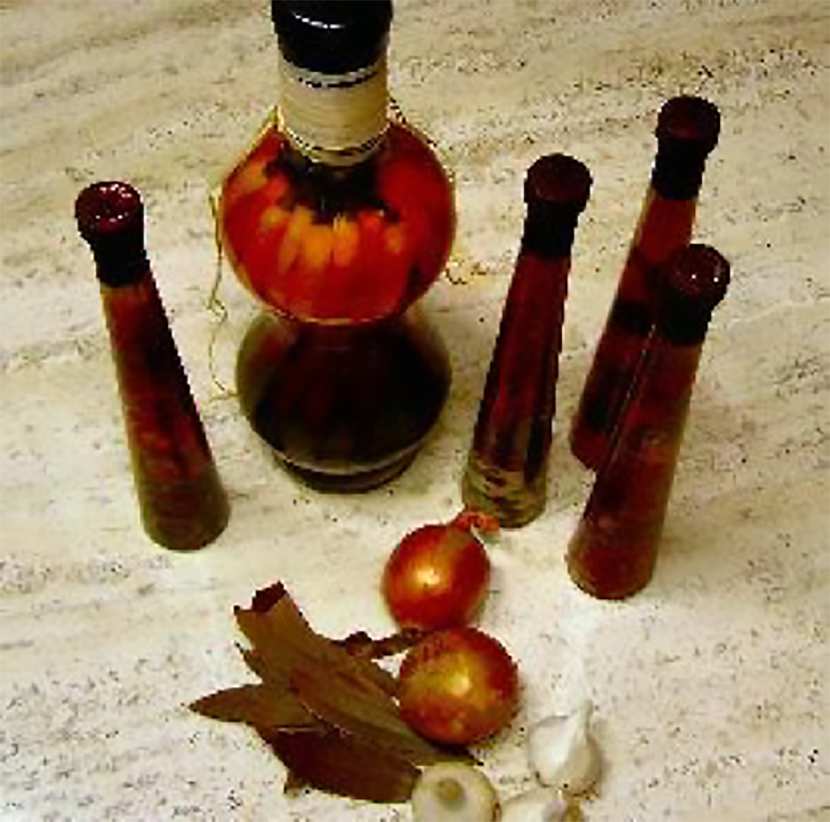
The infamous vinegar bottle!
A while back, a lady friend gave me one of those pretty herb vinegar sets – the kind with the beautiful herbs carefully arranged in the bottle and the vinegar poured in over them.
The vinegar is pretty good, actually, so I had been happily using the set in my cooking, which was nice, because it reminded me of her, and so in addition to the taste of the good food, I could revel in the aroma of sweet memories.
Well, one morning, I decided to make a pickled vegetable salad for a special pot luck. I put a big bag of mixed frozen veggies in a huge bowl, dumped in a large bottle of pepperoncini, including the vinegar, and started eyeing the rest of the goodies in the kitchen.
AH! The pretty bottles of vinegar! The pearl onions and long slender red peppers in them would be PERFECT!Hmmmmmmmm – they must really jam those puppies in there when they pack the stuff. NO WAY did any of the goodies want to come out.
Well, the more they resisted shaking out, the more I wanted them in the salad. I re-filled the bottles with a different spiced vinegar, shook them, inverted them, shook them up and down, side to side, and in circles – tried swirling and twirling – and made aerobics unnecessary for the evening.
A long chopstick helped get some of the goodies out – albeit in a rather macerated form. At last the “plug,” an exceptionally robust red pepper, burst, filling the mix with seeds, and some of the other peppers slithered out. AH! Victory!
With every fourth or tenth mighty shake, another tender morsel of herbal goodness slithered down the long neck of the bottle. As they joined the incipient salad, I though to myself, “Good thing I figured this out! What a waste if I had to throw away this bottle with all the goodies still inside!” For, you see, as a Hawaiian, it is a cardinal sin to waste food. Food is a gift of the gods, and must NEVER be disrespected. One of our sayings reminds us, “If you waste food, some day it will laugh at you.” This means that if one is wasteful, some day, when there is nothing, you will think back on all the food that had been wasted.
To think of the near-disaster I had averted! Whew!
So, I happily shook harder, and the first pearl onion slipped forth. Eventually, another plug developed. Again, the careful insertion of a chopstick produced results, though this time, as the remaining condiments were more solid in character, it was rather like playing one of those arcade games from small-kid time, chasing a huge toy about a glass case, armed with nothing but a stick carved with an insufficient hook.
At last, all of the peppers had joined the carrots, squashes, cauliflower, broccoli, and other vegetables in my stainless steel bowl. Most of the pearl onions had, as well. But, five remained. Five BAMBUCHA pearl onions. Five succulent, juicy onions, swollen with the delicately flavored vinegar. Obviously, they were the tastiest. I shook harder. My arms were getting sore! The onions merrily bounced about.
Then, a lightbulb flashed on. A short in the kitchen wiring? No! If I were to insert a slender knife up the long neck of the bottle, I could carve the outer layers of the onions off! Then they would at last join my prized salad!
This I did. The onions gleefully skittered away from the knife. BUT, by resuming my frenzied shaking, I was able to cause enough havoc to tear the outer layers off the onions. I removed the knife, and with a mighty shake the onions were at last free!
They burst from the long slender neck of the bottle and bounced across the salad to land squarely in the dishpan of soapy water.
Following are some recipes for gifts you can make in the kitchen, but if you need to give a gift of flavored vinegars and preserved condiments to a Hawaiian, I ask that you please give them in a wide-mouthed jar!
Seasonings Greetings
1 cup peeled garlic teeth
½ cup red chili peppers
¼ cup green chili peppers
3 bay leaves per container (select sizes that match the containers)
1 jar pearl onions – reserve juice to blend with vinegar
1 purple onion, halved and sliced into thin half-rings
Good quality apple cider vinegar
Either mix the peppers, garlic, and onions together and pour into the jars, or layer them into the jars. Insert thre bay leaves per jar, arranging against the glass so they are pretty. Add the pearl onion juice to the vinegar. Pour the mix into the jars to cover the other ingredients. Seal jars and refrigerate overnight. Give as gifts, saving at least one for yourself!
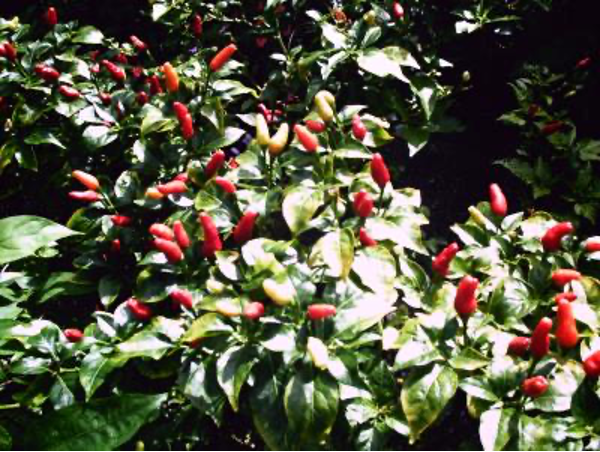
Hawaiian chili pepper growing in my Dad’s yard.
I’ve often been asked what my recipe is for chili pepper water. It’s pretty simple:
Chili Peppah Watah
Chili peppers
water
salt
Bring lightly salted water to boil in a saucepan. Toss in cleaned and washed chili peppers. Both red and green are pretty and festive for Christmas giving. Red is sweeter. Remove water from heat and allow to cool. Pour into jars, including a few peppers in each jar. There are no amounts given, as this is such an individual “to-taste.” Everyone has their own favorite proportions. (My own – 8 peppers per cup water, 1 pinch salt.)
Extra Ono Chili Peppah Watah
Same as above, but add a ball of limu kohu to the jar.
Chili Peppah Vinagah
Vinegar
Chili peppers
Pack a jar with cleaned and washed chili peppers. Add vinegar until covered. Add a pinch of salt if desired.
Fancy-Kine Chili Peppah Vinagah
Here is a version of “Chili Peppah Wata” with some vinaigrette heritage, making a salad dressing that is oil free – perfect for those wanting to cut back on calories, unlike the classic vinaigrette, which is made with 3 parts oil to 1 part vinegar.
1 Hawaiian chili pepper (or more, to taste)
1/4 cup apple juice
1/2 cup cider vinegar
1/2 round onion, chopped
2 cloves garlic, chopped
1/2 teaspoon dried whole oregano
Pinch rosemary
Pinch thyme
1/2 teaspoon dry Chinese mustard powder
1/2 of a roasted red bell pepper
Put everything in your blender jar. Buzz it a couple of times, but leave some texture. Serve immediately, or chill overnight to miko (let flavors blend).
Easy-kine Chili Peppah Jelly
Guava jelly
Chili peppah
Melt the guava jelly and add minced chili peppers to taste. Red and green make it look extra festive. Pour into jars and seal. Keep chilled as they are no longer sterile.
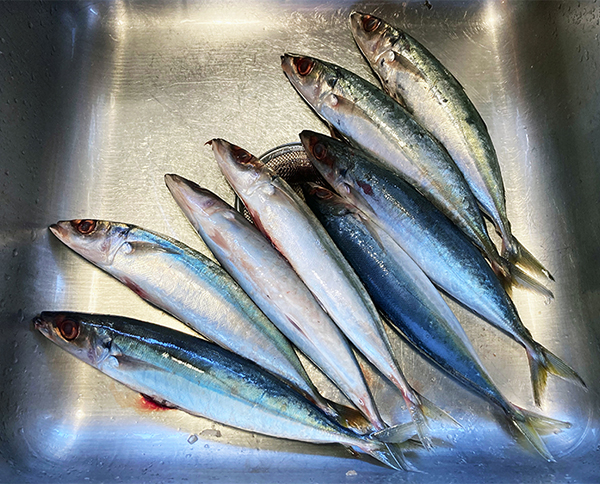
This past weekend, a friend brought us a gift of ʻōpelu (Mackerel scad, Decapterus pinnulatus or D. maruadsi). The timing was perfect, as I had been ʻono for (craving) lomilomi iʻa (fish massaged with condiments) for several weeks.
This is an old traditional recipe. Leave out the onions and tomatoes, and you’ll be eating the same kind of food our ancestors ate hundreds of years ago!
This dish is a close relative to poke. Poke generally is made from a large fish, the flesh of which is cut into blocks (poke literally means to cut something crosswise into blocks). Various seasonings and condiments are then mixed with the blocks of fish.
Lomilomi iʻa (lomilomi – massage / iʻa– fish) is generally made from small fish, the flesh of which is left in the skin and massaged with seasonings and condiments. The fish is then folded, flesh inside, and left to chill for an hour or longer to miko, to allow the flavors to develop and become tasty. If the fish is dry, or the day is warm, an ice cube may be placed inside each fish to chill and moisten it.
I learned to make this dish from my Nana’s dear friend, “Queenie” Arioli (Edith Carolyn Laakaumokuakama Arioli née Sharratt). I was probably about nine years old, so this was over a half century ago! We were at a house party in one of those marvelous old sprawling Island-style homes out in Waiākea, back when Waiākea was on the outskirts of Hilo. I was sent into the kitchen to kōkua (help) as was expected of children at the time. There beside the sink was a whole cooler full of ʻōpelu.
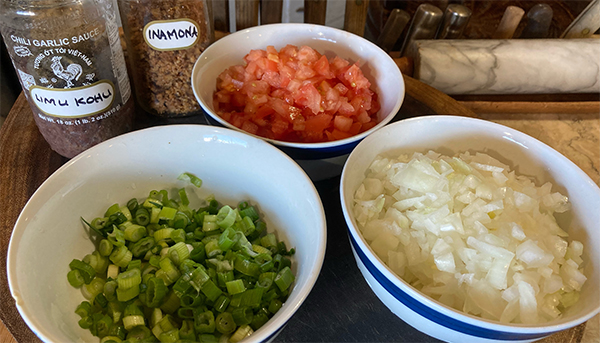
On the counter were bowls of the ingredients which we would lomilomi into the ʻōpelu: limu kohu (seaweed), ʻinamona (kukui nut relish), and bowls of minced round onion, spring onion, and tomato. The limu and ʻinamona are traditional condiments, while the onions and tomatoes were introduced by Europeans. Both the limu kohu and the ʻinamona have salt in them, so you will want to store them in plastic containers, or glass containers with plastic lids.
Mrs. Arioli (as I was expected to call her) was very kind in teaching me how to clean the delicate soft-bodied fish. She also was very kind when I was asked to dance hula for her. She made suggestions for my improvement, but without making me feel bad.
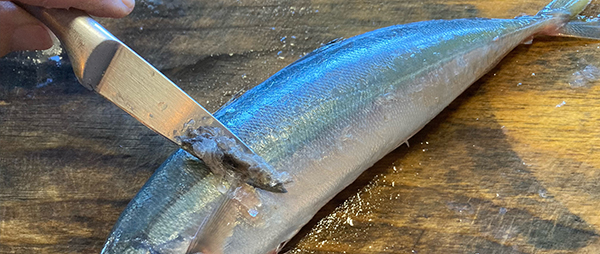
A somewhat dull knife is scraped along the skin to remove the scales, which are tiny and soft. They almost can be removed by simply rubbing your fingers on the fish. Almost, but not quite. So a knife is gently scraped along the skin and the scales wiped off into a kini (can).
Scaling ʻōpelu
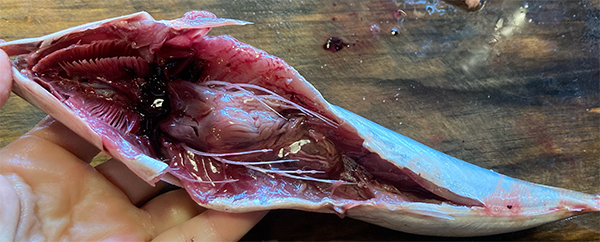
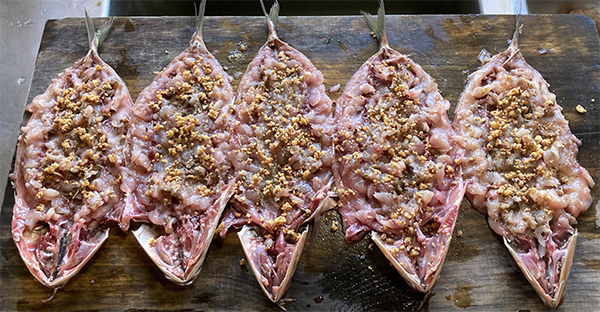
The belly is then slit and the head split so that the guts, gills, and spine can be removed and the fish laid flat. You’ll probably need to pull out some of the fine hair-like bones one at a time. Some people leave them and just spit them out later. I don’t like them, so I try to remove them all.
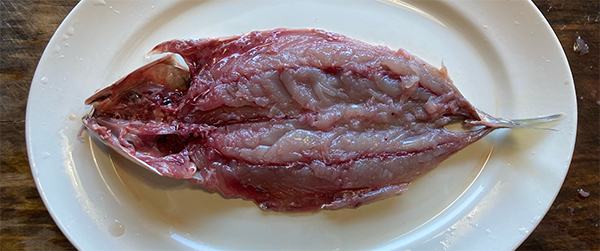
Remove gills, guts, and spine.ʻŌpelu, butterflied and ready to lomilomi!
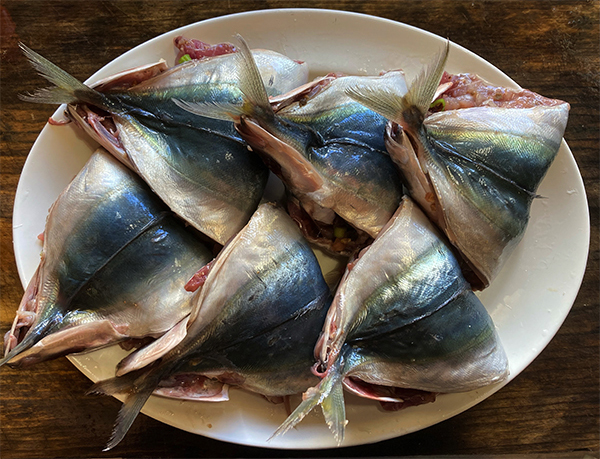
Once your iʻa (fish) is cleaned and split or butterflied, fold them flesh inside, wrap them, and set them in the fridge or a cooler to chill.
If you did not already prepare your condiments, you can do that now while the fish is chilling.
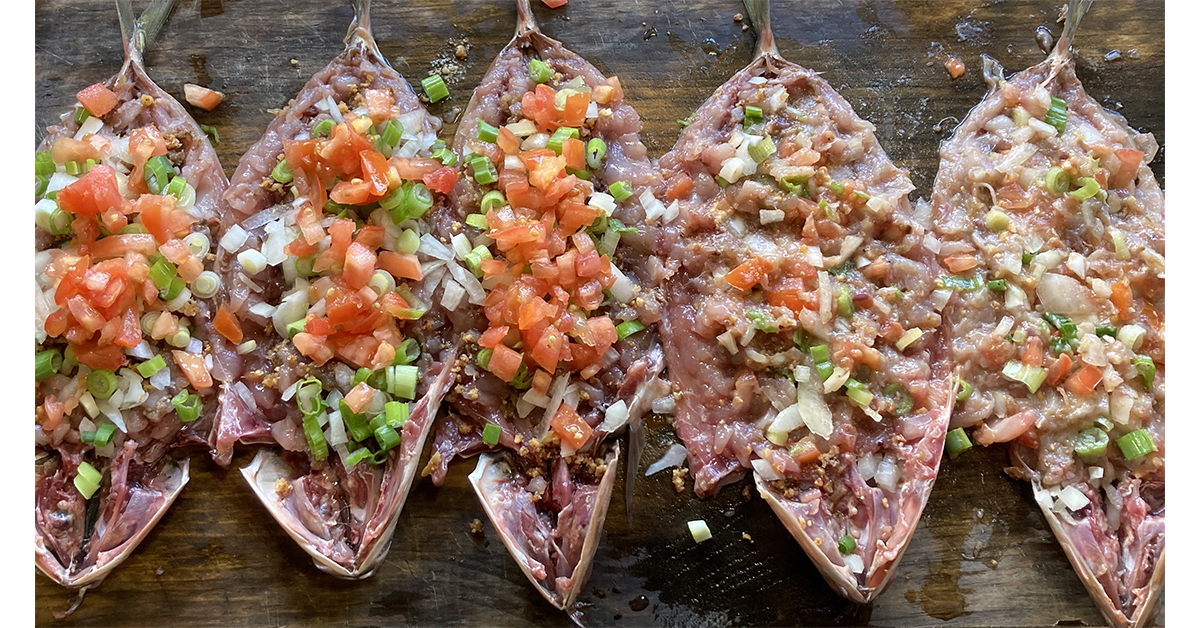
At least an hour, or as much as a day, before serving, get out the fish and add the seasonings and condiments. I like to add the seasonings—limu kohu and the ʻinamona—first so that they can start to miko the fish already.
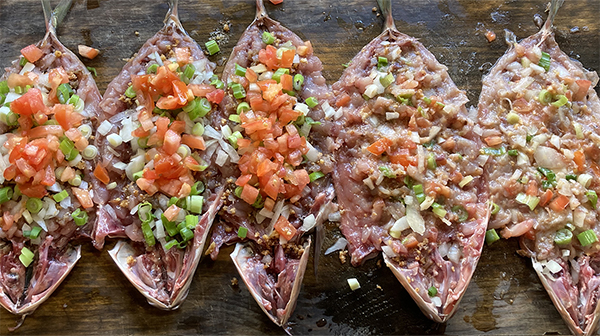
Next, I add the tomato and onions and lomilomi them into the flesh as well.
You want to lomilomi the condiments in thoroughly, as with the two fish to the right.
When the ʻōpelu are prepared, then fold them and place in a covered container. Remember, if the fish is dry, or the day is warm, an ice cube may be placed inside each fish to chill and moisten it.
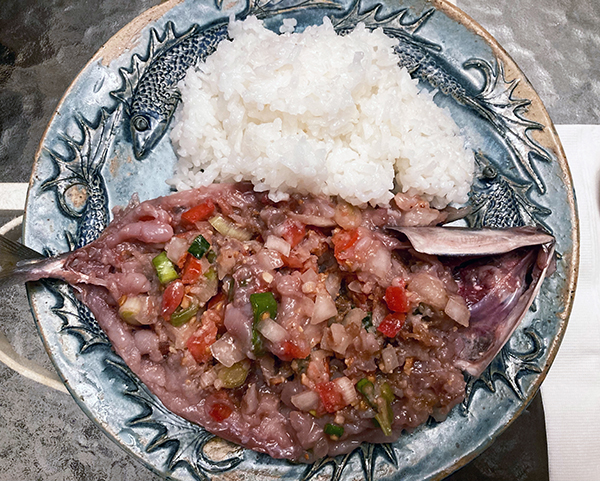
My favorite thing to eat with lomi ʻōpelu is poi, but I didn’t happen to have any, so we had it for supper with rice.
Lomilomi ʻōpelu and rice served on a plate my late mother, an amazing ceramicist, made.
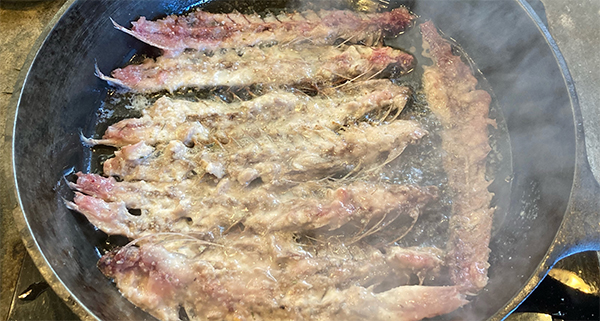
So now you have a bunch of fish bones, as well as the roe, milt, livers, hearts, and little bits of flesh. What do you do with them? Time to get out a heavy skillet and cook up a batch of ʻōpelu bone!
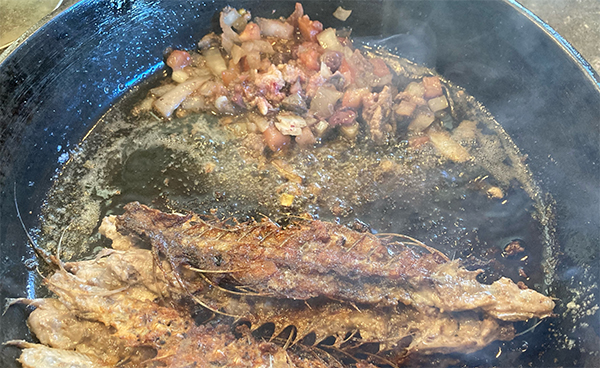
Heat coconut oil and a little butter for flavor until it is sizzling hot. Lay in the fish spines and sprinkle with garlic salt. When they are nicely toasted on one side, turn them over and fry the other side crunchy crispy. I love these as a snack!
While the bones are crisping, mix some of the onions and tomatoes with the roe, etc.
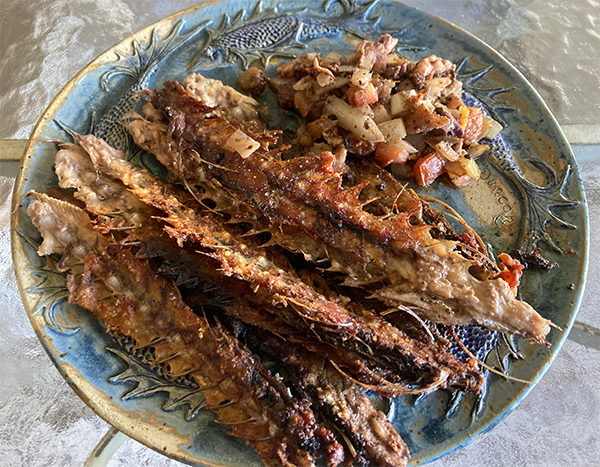
Stack the bones on one side of the skillet to stay warm, and then tilt the skillet so the oil runs to the other side. Add the fish mix and fry in the remaining oil. Serve hot.
Crispy ʻōpelu bone and nāʻau served on a plate my mother made.
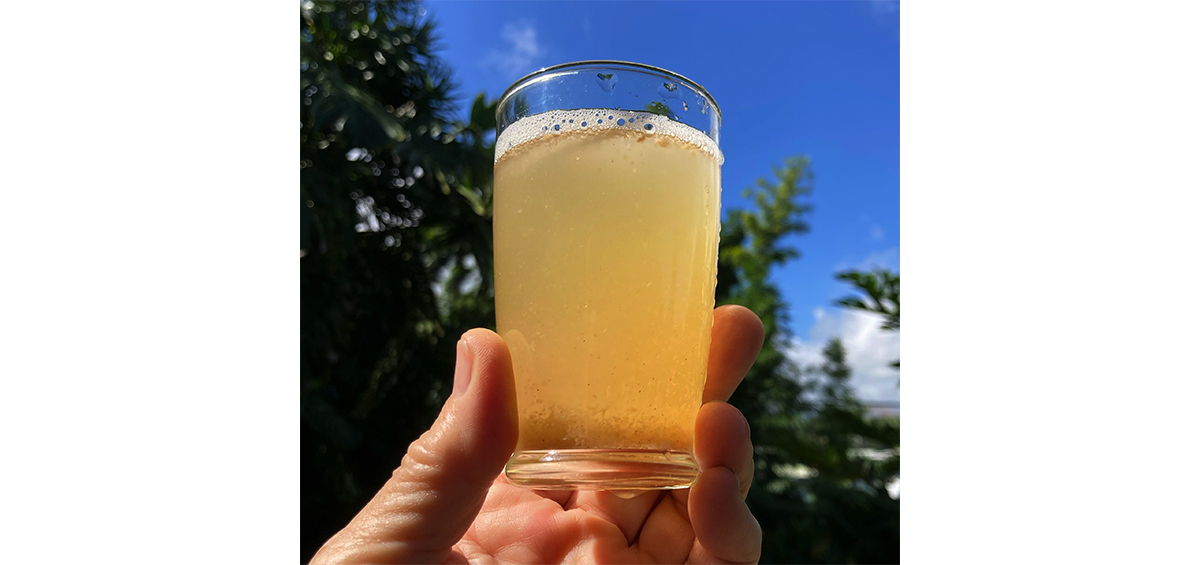
Tepache is an ancient style of fermented beverage which has its origins in Pre-Columbian Mexico. It is a popular drink among the Nahua people of central Mexico. In the Nahuatl language, the word tepiātl means “drink made from maize (corn)”, as the first versions were made from that grain. Today, there are many varieties of tepache, with the most common being made from pineapple rinds.
While the Vaqueros of Las Californias probably made some similar brew and brought the recipes with them when they came to our islands, I do not have documentation of that. I first learned about tepache from a lovely haole friend who is something of a foodie. She brought some over for lunch. I then asked a Mexican friend about it, and he shared his recipe.
Since learning about this beverage, I have been making it with with everything from pineapple to coffee cherry pulp to mangos. They all have been delicious! Some have had more “buzz” than others. I really should ante up and get a hydrometer so I can measure just how much alcohol is in each batch!
1 cup piloncillo (Mexican brown cane sugar) grated (when available) or turbinado sugar
handful of cinnamon sticks, number depends on how fresh/strong they are
cloves, again, depends on how fresh/strong they are
2 quarts filtered water
Place all of the ingredients in a large sterilized glass container. I like to cover tightly with cheesecloth so no insects can get in, and then put a cover lightly over that because the fermenting juice attracts fruit flies and geckos, and I do not want to share!
Check your tepache each morning and evening. Skim off the white foam. After 24 hours, taste test a little. When it seems right (in 2 to 4 days), strain and refrigerate. Serve chilled.
You will want to use it up within a couple of days because it will continue to ferment and quickly turn to vinegar. Of course, a nice vinegar has many uses, too!
Mango tepache fermentingSkimming the mango tepache
Your purchase through our Amazon links helps to support this website. Mahalo!
Part of growing up local is learning to, as my Nana used to say, “use it up, wear it out, make it do, or do without.”
As a result, I find that I derive a lot of inner satisfaction and peace from refurbishing and restoring old things, making them useful again.
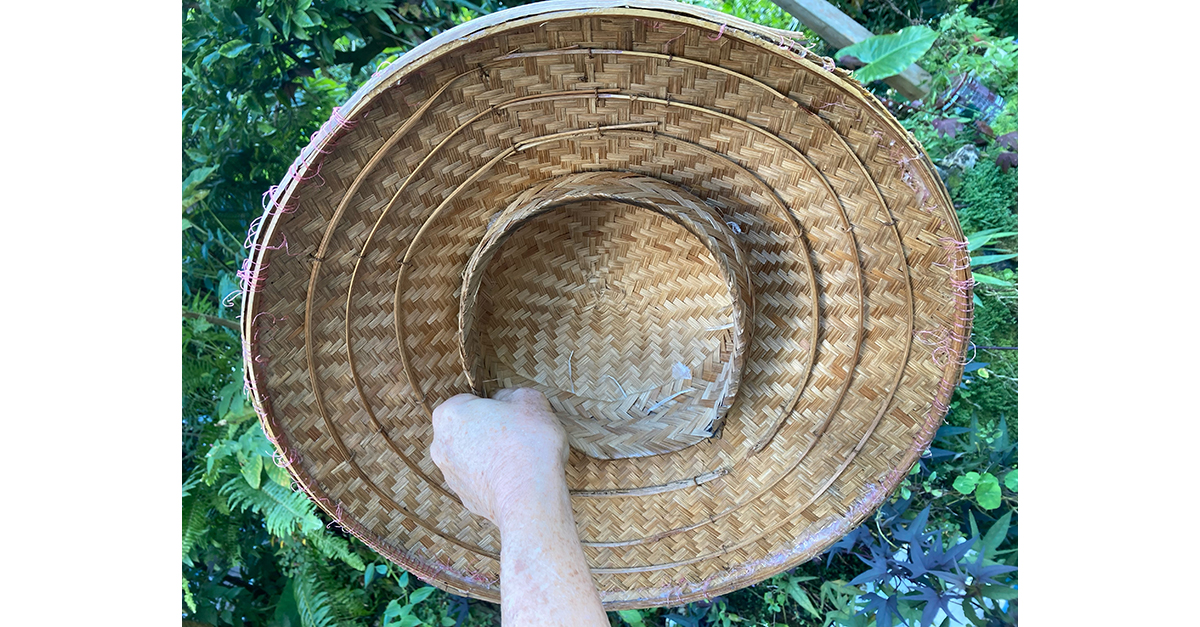
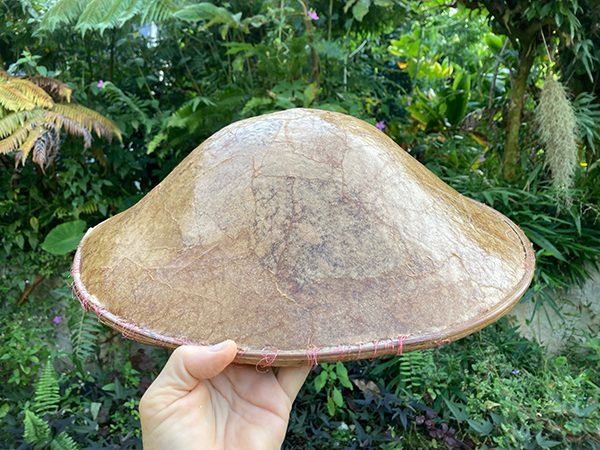
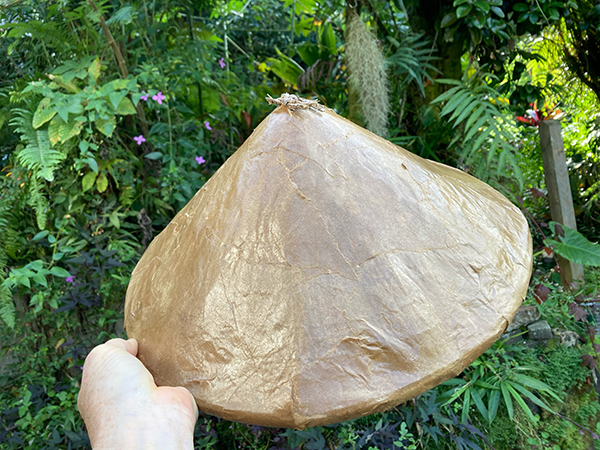
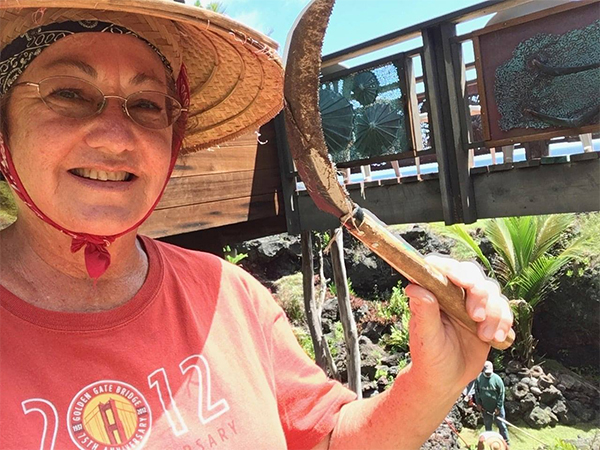
After some 30 years of heavy use, my mother-in-law’s old nón lá and my old dǒulì were so beat up they were getting unusable. The outer weavings were cracked and broken, letting the inner weavings warp and lose stability. I probably could throw them away and buy new, but I love the memories attached to these. So. . . papier-mâché to the rescue!
I saturated them in marine-grade wood glue, then applied torn paper bags which had been soaked in the same. After they were thoroughly dried, I used a waterproof spray varnish on them. Now to just add new tie scarves, and they are ready for another 30 years of use!
My dǒulì after papier-mâché and varnishing.My Mother-in-law’s nón lá after refurbishing.Me in my dǒulì pre-repairs. Note the bamboo edge un-edging! We are at my Dad’s hale. My husband is down in the crater weed-wacking.
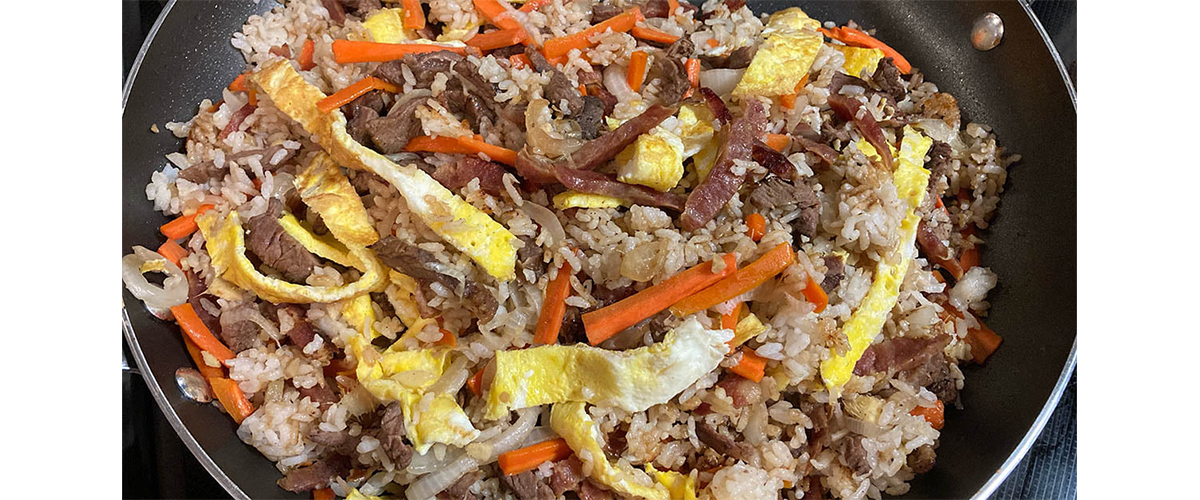
Working on my Dad’s style of fried rice, which continues to evolve to meet the changing times and fridge contents. We don’t actually have a recipe. It’s more of a method, as in our family, fried rice is made from all the little bits of things you have saved in the fridge because they are too good to toss out.
Don Yuen’s Fried Rice
cold leftover rice
sesame oil
leftover meat
pipikaula* or other smoked meat
garlic
round onion
Szechuan pepper
leftover vegetables
eggs
spring onions / green onions
Some people insist on specific types of long grain rice. We just use whatever happens to be left over from the night before. Put the rice in a big bowl and fluff it up a bit so it can dry while you are getting ready for it.
Julienne the meat, garlic, onion, and vegetables and set them in separate bowls.
Mince the green onions.
Beat the eggs.
Put a little sesame oil in a heavy skillet or wok. As it is warming, add the leftover meats and pipikaula.
Heat so that the fat renders. When the fat starts rendering, add the garlic, onions, and Szechuan pepper. Scrape to the side of the skillet or wok.
Pour the eggs into the fat and make a thin omelette. When it is cooked through, remove it from the pan and set aside.
Turn up the heat and give the meat a stir. When a drop of water dances in the pan, add the rice a little at a time so that it lightly toasts as it is added. Keep stirring and turning the rice as you add it. When all the rice is added in, then add the vegetables.
While the vegetables are heating in the rice, cut the egg into narrow strips about two inches long. Add the egg to the rice. Toss gently so it is well mixed. Garnish with green onions. Also, you can serve the whole green onions on the side with a little salt for dipping.
Serve with your favorite chili sauce.
*Pipikaula gets its name from the Hawaiian words Pipi (beef) Kaula (rope). In the old days, flank steak would be cut into long ropes, soaked in a sauce of shoyu, ginger, garlic, peppers, etc. and then hung in the smokehouse to cure.
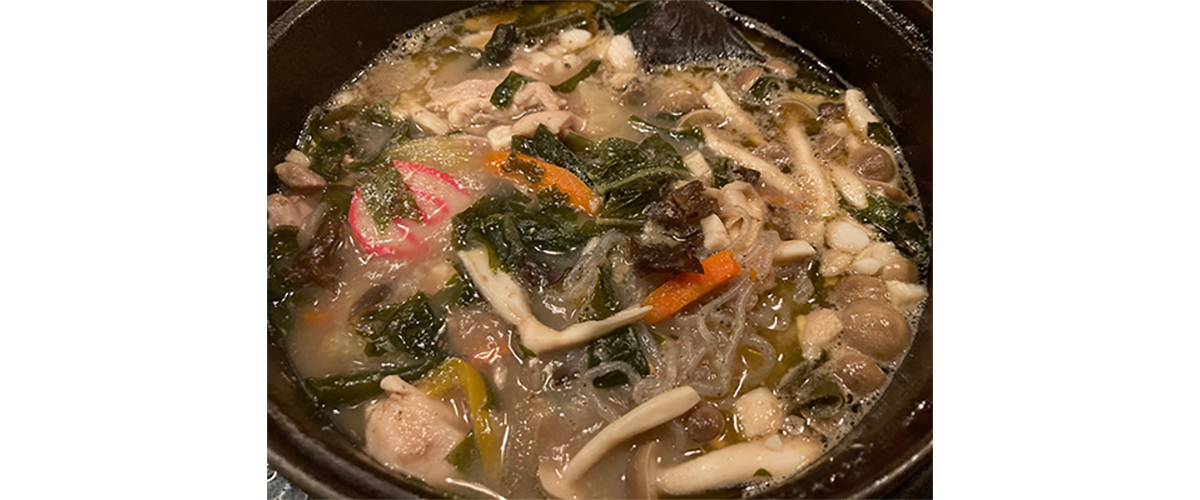
It had been raining for weeks on end, and I just didn’t feel like shopping. The larder was getting bare! Trying to figure a supper to go with a winter storm:
Leftover nabe + miso, konnyaku noodle, kelp, black fungus, gourd, tofu, mushrooms. Whatever I could find.
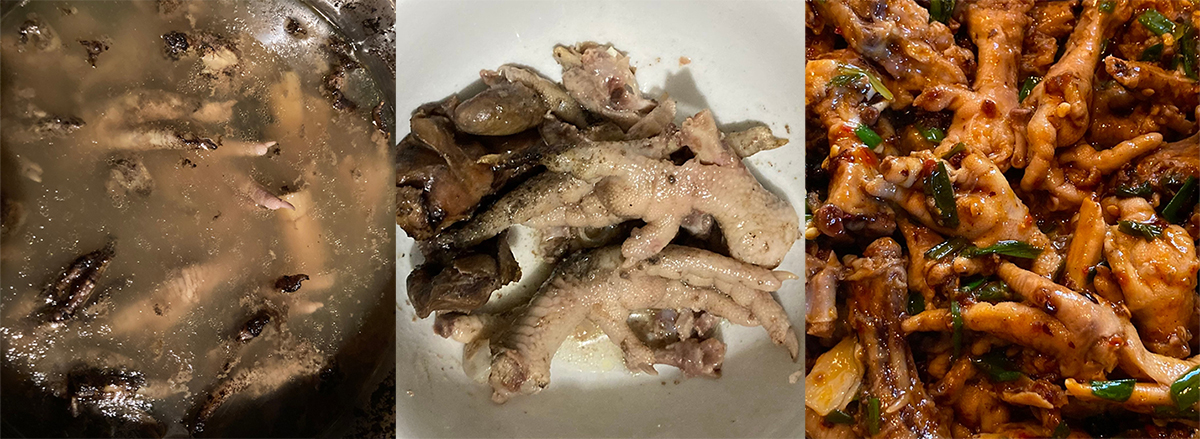
I like to buy chicken feet to make bone broth. Usually I get them from The Locavore Store or from Puna Chicks. One day I decided to set some aside to eat as a snack. Well, I posted the pix on-line and after suggestions from friends, the snacking got a bit carried away and I ended up with a huge bowl of incredibly tasty spicy chicken feet! I’m going to claim it as Chinese because it tastes like my memories of eating Chinese food with my grandfather. But the suggestions came from Chinese, Korean, Japanese, and Vietnamese e-friends on Facebook! 💖
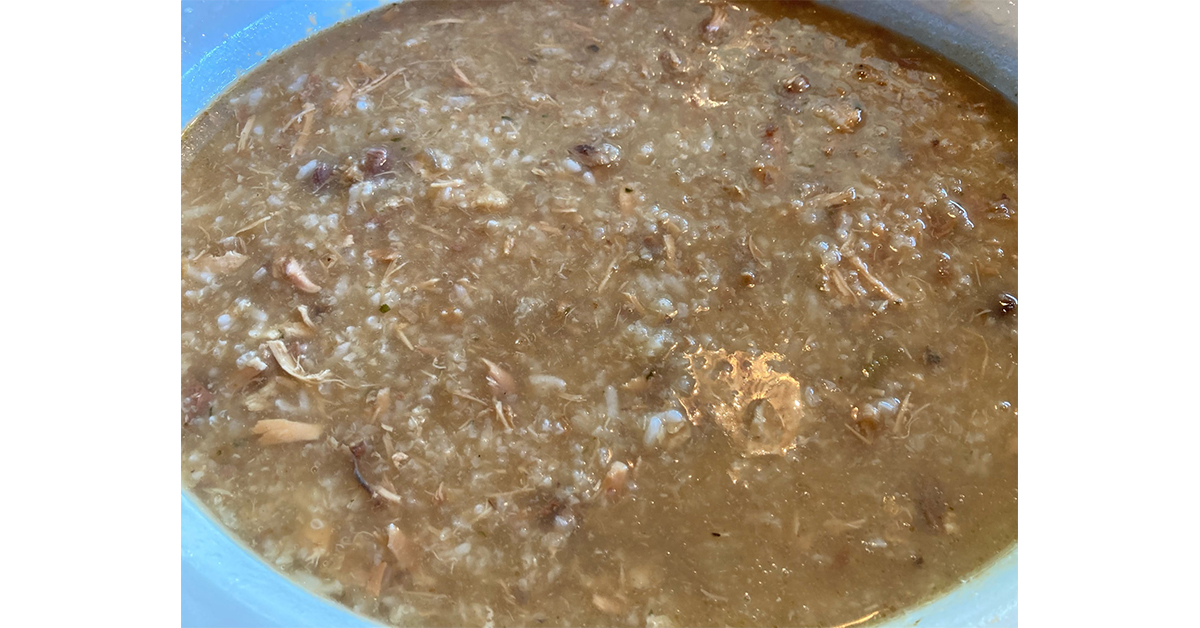
Jook (also known as congee) is a family affair. It’s made from the bones of the bird you ate as a family, everyone helps to cut up the giblets and scraps, and everyone takes a turn at watching the pot. At least, that’s how I was raised that it should be. Now, it is only two of us and our Fur Boi in the house. My father lives in his house with my stepmom, and my daughter lives in her house with her family, so such family-style cooking is rare these days.
I was talking on the phone with my dad this morning and I told him I would bring him jook that I had made from our Christmas bird. He was sad. “Oh, I saved all the giblets so we could make it together.” I must find pídàn, salted duck eggs, and fresh duck eggs to take in humility when I visit! Also good Scotch whisky.
Everyone I grew up around makes jook using broth, meat, and giblets to simmer the rice. I was in my 40s before I ever learned about “white jook” (congee)! My family are Nam Long from Zhongshan who began immigrating to Hawaiʻi around 1840, so our recipes date from the mid-1800s and morphed depending on what was available.
Jook
In a large stock pot or slow cooker, cook up turkey and/or chicken carcass with giblets. When the meat falls off, pick it apart and reserve in a separate bowl. Continue to cook the carcass until the bones soften. Smash them up thoroughly and continue to cook another hour or so. Strain the broth through a colander.
Add the meat and giblets minced fine, some chopped round onions, and crushed garlic to the stock. Add rice.
Continue to simmer until the rice “melts” and the jook becomes smooth and creamy, but you can still see grains.
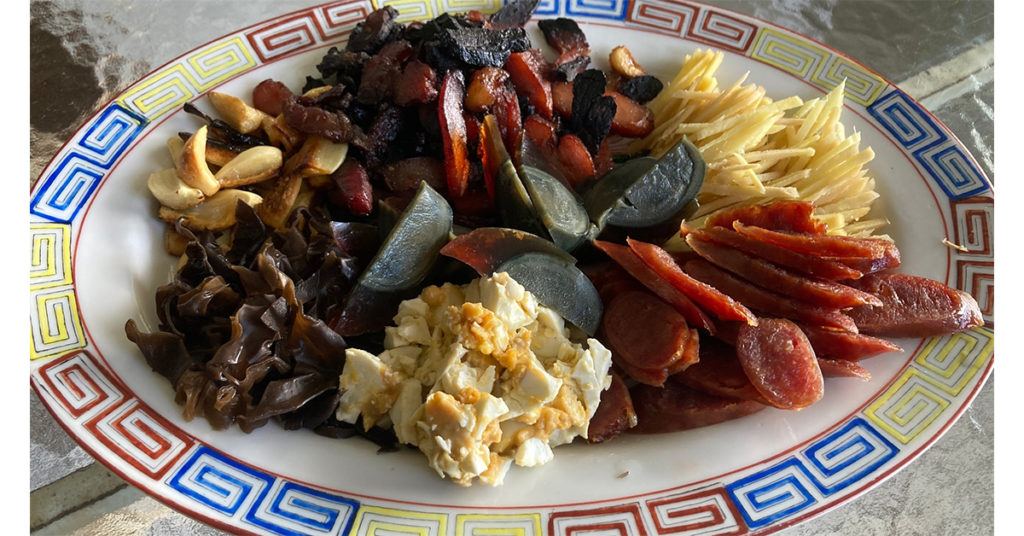
Serve with minced chicken livers, thin slices of lup cheong, pídàn (lime-preserved egg), salt duck egg, minced mushrooms, minced scallion or spring onions, thin slices of char siu, or whatever other condiments you would like.
A platter of condiments ready to be added to jook.